Software Testing Life Cycle
Posted By : Sonali Gupta | 29-Jun-2017
Software Test Life Cycle:
- It is a Procedure to Test the Software
- Only Testing Team is Involved
Below the Figure and Description of Test Cycle Briefly Described
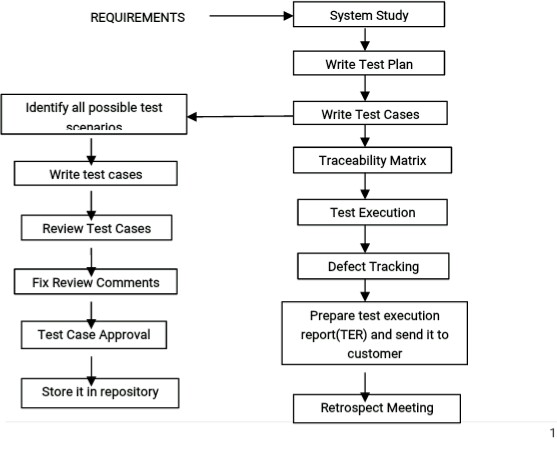
1. REQUIREMENTS COLLECTION / SYSTEM STUDY:-
The requirements can be in any of the following forms,
- CRS (Customer Requirement Specification)
- SRS (System Requirement Specification)
- FS (Functional Specification)
- If we don’t have requirements and if we are given only the application, then we do exploratory testing.
- Use case
2. Test Plan:-
Test Plan is a document Explained for all future activities of the project. All future testing activities is planned and put into a document and this document is known as Test Plan. when we should start and finish writing test cases, executing test cases, what are the types of testing we use to test for the application etc.
3. Write test case:-
Write test cases for each feature. These test cases are reviewed, and after all mistakes are corrected and once the test cases are approved – then they are stored in the test case repository.
4. Tracibility Matrix:-
It is Document that ensure us that every Requirement should have atleast one test case, the Tracibility Matrix does not ensure 100% coverage. It gives us about 50-60% coverage by making sure test cases are available.
5. Defect Tracking Tool:-
- Once the Test Engineer start Performing testing on a software, definitely be able to catch the Bugs
- Catching or maintaining the Defects in one centralized place can be done with the help of Defect Tracking Tool
- Any Bug found by the testing team send it to the Development Team, these bugs is to be fixed by Development Team
Tool that are used by the Test Engineers are:-
- Bugzilla
- Jira
- Mantis
- Bug Genie
6. Test Execution Report:-
- This is the phase where the Test Engineer actually perform the Testing, this is the phase where it become productive for the Team
- Tells the Progress of the Product by telling, what is the pass%, fail% and also about the number of Test Cases Executed in a Software
- Usually it is prepared by the Test Lead
7. Retrospect meeting(Post Mortem Meeting / Project Closure Meeting)
- The Test Manager calls everyone in the testing team for a meeting and asks them for a list of mistakes and achievements in the project.
- This is done by test lead or test manager. Here, the manager documents this retrospect meeting and stores it in QMS (Quality Management System). It is a folder, where inside this folder, there is another folder called Retrospect folder and here this excel sheet document is stored. When we get new project, while we write the test plan – we will open this retrospect file and will try and implement the good practices and correct the mistakes.


Cookies are important to the proper functioning of a site. To improve your experience, we use cookies to remember log-in details and provide secure log-in, collect statistics to optimize site functionality, and deliver content tailored to your interests. Click Agree and Proceed to accept cookies and go directly to the site or click on View Cookie Settings to see detailed descriptions of the types of cookies and choose whether to accept certain cookies while on the site.
















About Author
Sonali Gupta
Sonali is certified in manual testing and selenium web driver. She is a B.Tech through Electronics and Communication.